
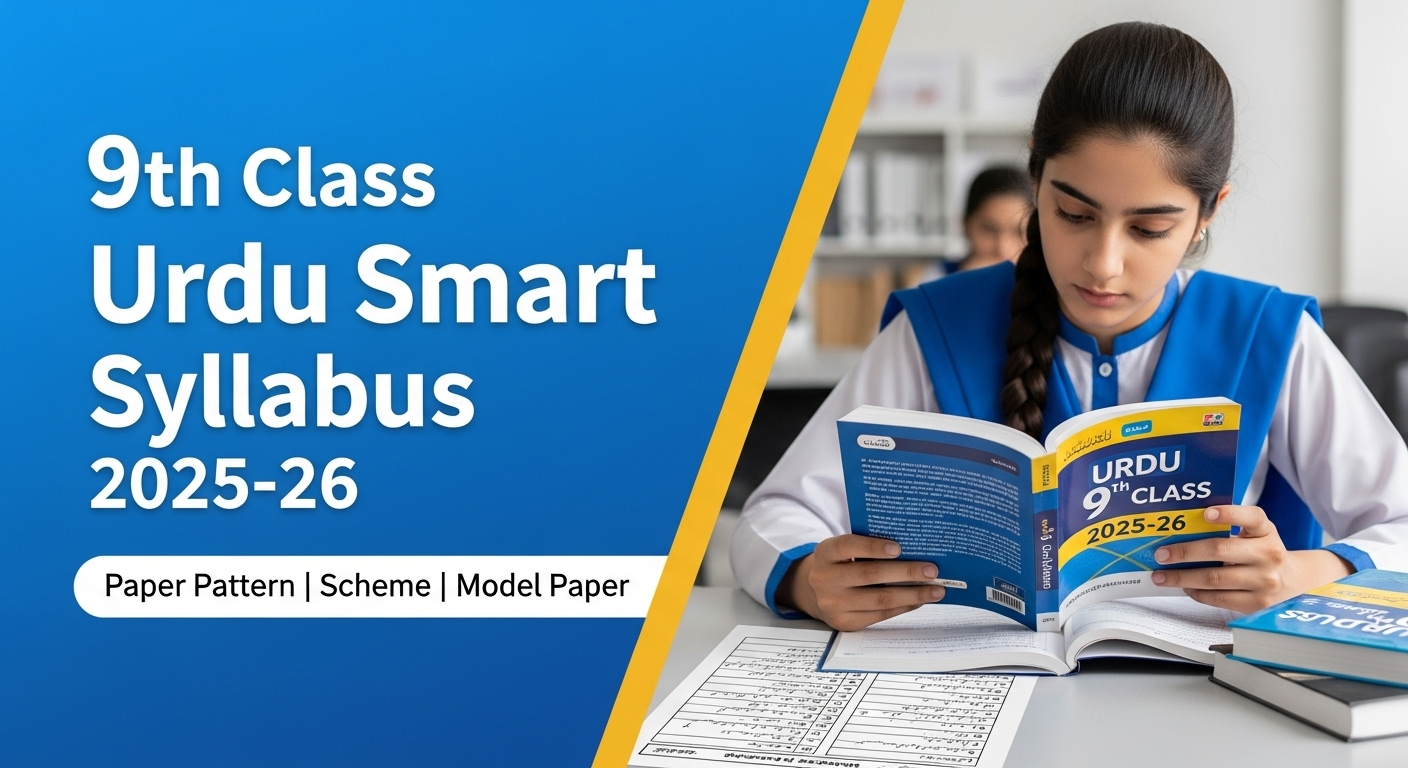
Have you ever felt confused about how to prepare for your 9th Class Urdu paper? You’re not alone! Every year, thousands of students in Punjab struggle to understand the latest Urdu smart syllabus, paper pattern, and scheme issued by the board. The fear of missing important topics or misunderstanding the paper format can make exam preparation stressful. But don’t worry — this guide will help you understand everything about the Urdu paper pattern, syllabus, and model paper for 2026, so you can study smartly and score top marks.
Understanding the 9th Class Urdu Smart Syllabus 2026
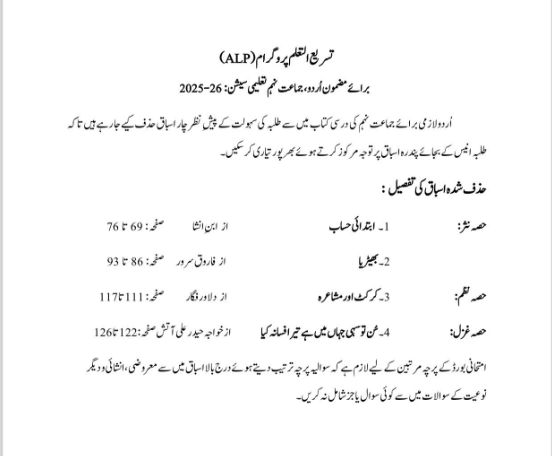
The Punjab Curriculum & Textbook Board (PCTB) has designed a smart syllabus for Urdu to make exam preparation easier and more focused. The syllabus has been reduced by almost 30%, keeping only the most important chapters, poems, and prose selections.
Key Focus Areas in Urdu Smart Syllabus
- Nazam (Poetry): Selected poems from famous poets are included, emphasizing moral and national values.
- Ghazal: Students must learn the meaning, theme, and explanation of the selected ghazals.
- Nasar (Prose): Important lessons from Urdu Adab that improve language understanding and writing skills.
- Grammar (Qawaid): Correct use of tenses, idioms, proverbs, and sentence formation.
- Essay Writing & Letter Writing: Based on current topics and practical life situations.
This smart syllabus ensures that students focus only on high-value topics instead of memorizing lengthy content.
9th Class Urdu Paper Pattern 2026 (All Punjab Boards)
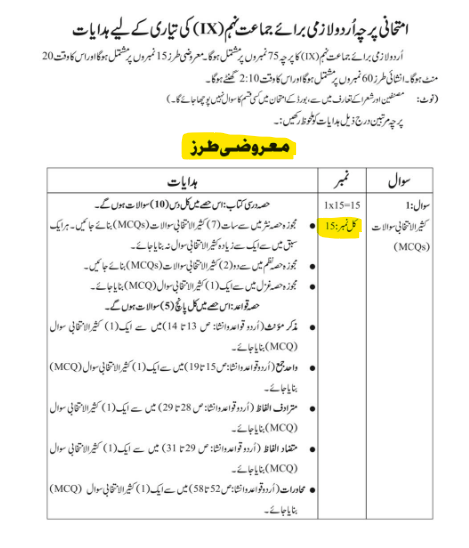
The total marks for the Urdu paper are 75, and the total time allowed is 2 hours and 30 minutes. The paper is divided into two major sections: Objective and Subjective.
Objective Section (15 Marks)
- Duration: 20 minutes
- Includes 15 multiple-choice questions (MCQs).
- Each question carries 1 mark.
- MCQs are taken from all units of the textbook, covering poetry, prose, and grammar.
Subjective Section (60 Marks)
- Duration: 2 hours and 10 minutes
- Divided into different questions as explained below:
Also Read: English 9th Class Paper Pattern 2026
Part 1: Explanation (10 Marks)
Students have to explain selected verses or passages from the textbook with reference to context.
Part 2: Short Questions (10 Marks)
Answer any four out of six short questions from the given passages or poems.
Part 3: Essay Writing (10 Marks)
Write an essay on any one of the given topics. Topics usually cover social, moral, or educational themes.
Part 4: Poet or Author Introduction (5 Marks Each)
You may be asked to write a short note on:
- Any one poet (e.g., Allama Iqbal, Mirza Ghalib)
- Any one author (e.g., Deputy Nazir Ahmed, Altaf Hussain Hali)
Part 5: Letter or Application (5 Marks)
Write a formal or informal letter/application based on a given situation.
Part 6: Correction and Completion (5 Marks)
Complete or correct given sentences or phrases according to Urdu grammar.
9th Class Urdu Paper Scheme 2026 (Punjab Boards)
According to the latest scheme by Punjab Boards, 90% of the paper will be based on the smart syllabus and reduced course, while 10% may include general or creative questions.
All Punjab Boards, including Lahore, Rawalpindi, Faisalabad, Sargodha, Gujranwala, Multan, Bahawalpur, Sahiwal, and D.G. Khan, will follow the same paper scheme and pattern.
Highlights of the Urdu Paper Scheme:
- MCQs from all chapters
- Short and long questions from the reduced syllabus
- Essay and letter based on practical topics
- Poetry explanation from selected nazams and ghazals
- Grammar portion according to PCTB syllabus
This uniform scheme helps ensure transparency and fairness for all students across Punjab.
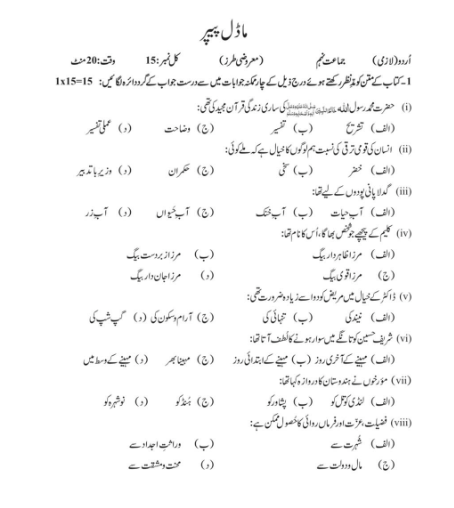
Model Paper for 9th Class Urdu 2026
To perform well in the exam, it’s important to practice using model papers provided by the board. The model paper gives a clear idea of:
- The number of questions from each section
- Question format and mark distribution
- The difficulty level expected in the final exam
Expert Tip:
Solve at least 3–5 model papers before your board exams. This will help you improve your time management, handwriting, and confidence.
9th Class Urdu Smart Model Paper
How to Prepare Effectively for Urdu Exam 2026
Follow these practical tips to boost your Urdu exam preparation:
- Study from the smart syllabus only – Don’t waste time on excluded chapters.
- Memorize meanings and explanations of important poems and prose.
- Practice writing essays and letters in neat handwriting.
- Revise grammar rules daily, especially idioms and correction exercises.
- Attempt previous board papers for real exam experience.
Final Thoughts
The 9th Class Urdu Smart Syllabus and Paper Pattern 2026 aims to make learning easier, fair, and student-friendly. By following this updated scheme, understanding the paper format, and practicing through model papers, students can confidently prepare for the Urdu exam. Remember, success comes from smart study, regular revision, and focused practice.